
Blog
We’re here to connect, collaborate, and support your packaging journey. Let’s talk and build smarter, sustainable solutions together.
Disposable Paper Packaging Trends: What Buyers Should Watch in Materials and Supply
Why disposable paper packaging sourcing is getting more complex
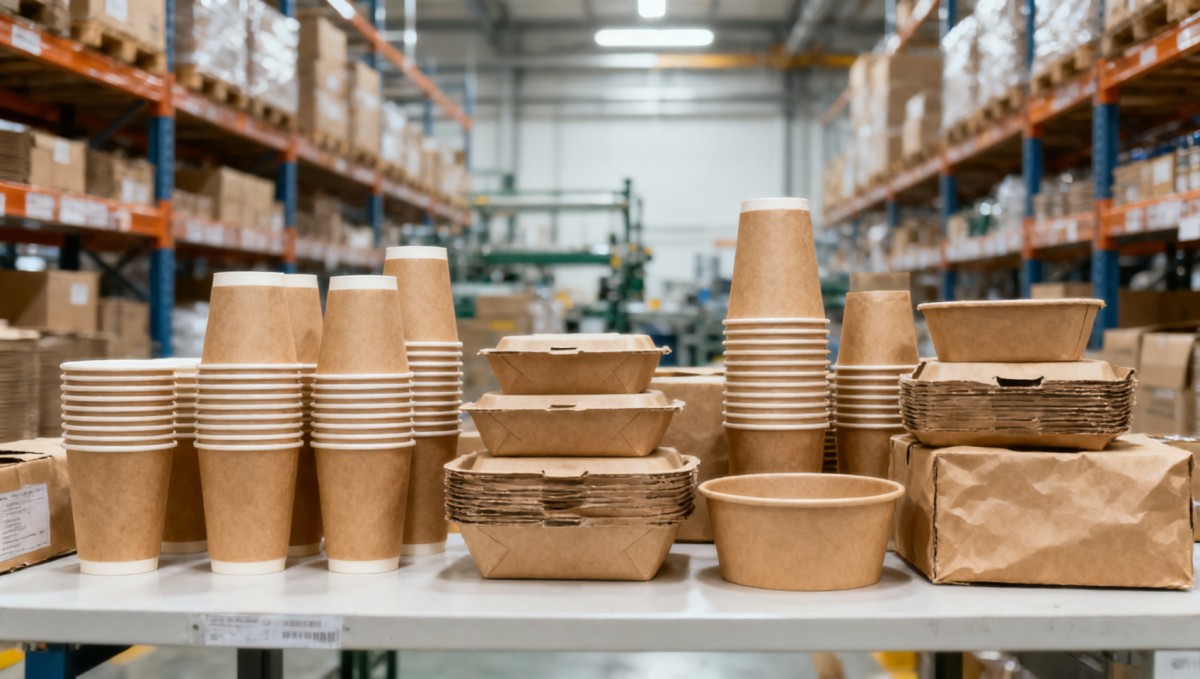
The disposable paper packaging market is no longer shaped by price alone. Buyers now face tighter compliance rules, uneven freight conditions, and rising expectations around product consistency.
That shift matters because small sourcing decisions now carry wider commercial effects. A lower-cost item can become expensive when failure rates, delivery delays, or labeling errors reach end customers.
From recent market activity, a clearer pattern is emerging. Demand is moving toward disposable paper packaging that balances material performance, export readiness, and dependable replenishment.
This is especially visible in Southeast Asia, where supply diversification has become a practical priority. Malaysia is gaining attention because it combines manufacturing capability, trade access, and stable export support.
For businesses building long-term product lines, the real question is not only where to buy disposable paper packaging. It is how to secure a supply base that protects service levels and preserves margin.
The strongest signals are coming from materials, not just market demand
One notable change is the growing scrutiny on paper quality and barrier performance. End users expect packaging to handle heat, moisture, grease, and transit stress without creating complaints.
That expectation is pushing disposable paper packaging away from simple commodity thinking. Material choices now affect brand perception, return rates, and the ability to serve foodservice or retail channels reliably.
In practice, several material-related issues are being checked more carefully:
- Paper stiffness and shape retention during filling, stacking, and transport.
- Coating or lining behavior under hot, oily, or wet conditions.
- Odor neutrality and clean surface finish for customer-facing applications.
- Print compatibility for OEM and private label requirements.
- Consistency between production batches, not only initial samples.
More buyers are asking for testable performance rather than broad claims. This reflects a market where disposable paper packaging must work across multiple channels, climates, and handling conditions.
A supplier that understands these material pressures can reduce hidden risk. That becomes valuable when product complaints cost more than the unit price difference.
Compliance pressure is reshaping what counts as a reliable supply partner
Another trend is the rise of compliance as a frontline sourcing filter. Disposable paper packaging now sits closer to documentation, traceability, and market-entry requirements than many buyers expected a few years ago.
This is happening for several reasons. Food-contact standards are tightening, private label programs are expanding, and importers want fewer surprises at customs or during client audits.
The result is a broader definition of reliability. A factory may offer attractive pricing, but that alone is not enough if export documents, specifications, or labeling support are inconsistent.
This explains why professional export support has become more important in disposable paper packaging. Documentation discipline now supports commercial stability, not just administrative convenience.
Supply resilience is becoming a bigger buying factor than headline price
Freight volatility has eased from peak disruption, but supply risk has not disappeared. Lead time swings, raw material variation, and sudden order shifts still affect disposable paper packaging programs.
Because of that, sourcing teams are paying closer attention to factory stability. The key concern is whether a partner can deliver the same product quality across repeated export cycles.
More businesses now compare suppliers using a wider set of operational signals:
- How often lead times change after order confirmation.
- Whether sample quality matches production output.
- How clearly the factory handles specification changes.
- Whether export coordination is routine or reactive.
- How well OEM jobs are managed without disrupting standard orders.
This is where Malaysian manufacturing has gained credibility. For disposable paper packaging, Malaysia is often viewed as a practical sourcing base with competitive cost, solid production standards, and dependable international shipping support.
Factories such as XG Paper Manufacturing Sdn. Bhd. fit this market shift well. The value is not only production capacity, but the combination of consistent quality, OEM flexibility, and export familiarity.
Customization is no longer a niche request
A few years ago, many disposable paper packaging orders were relatively standard. That is changing as brand owners and channel partners push for more product differentiation.
Today, customization often includes size adjustments, print design, pack configuration, and application-specific performance. These requests are no longer occasional extras. They are becoming part of normal sourcing discussions.
The commercial reason is straightforward. More competitive shelves and more fragmented foodservice formats create pressure for packaging that fits local use cases and branding needs.
For disposable paper packaging, that creates both opportunity and risk. Custom programs can raise value, but they also demand stronger communication, stable manufacturing control, and accurate reproduction across orders.
OEM and private label capability therefore matter more than before. A supplier that can align artwork, material behavior, and export execution offers a more workable route to repeat business.
The impact is spreading across margins, inventory, and customer trust
These market changes do not stay inside the packaging category. They affect inventory planning, claim management, account retention, and the speed of new product rollout.
When disposable paper packaging performs inconsistently, the damage often appears later. It may show up as slow-moving stock, rejected shipments, or complaints that weaken confidence in the wider product range.
More importantly, stronger packaging execution can create quieter advantages. Reliable fill performance, stable quality, and fewer shipping issues help protect service levels without demanding constant intervention.
That is why experienced buyers are looking at total supply performance. The decision is increasingly about landed reliability, not simply the cheapest disposable paper packaging quote on paper.
What to watch next when evaluating disposable paper packaging supply
The next phase of the market will likely reward partners that combine stable manufacturing with practical responsiveness. That mix is becoming more valuable than scale alone.
In the near term, several checkpoints deserve closer attention:
- Review whether material specifications reflect actual end-use conditions, not generic assumptions.
- Check how the factory manages repeat quality across batches and custom runs.
- Compare export support quality, including documentation accuracy and shipment coordination.
- Assess whether lead times are consistently maintained during peak demand periods.
- Confirm that OEM and private label work can be handled without compromising core product reliability.
For businesses reviewing Southeast Asia options, disposable paper packaging from Malaysia deserves a closer look. The market is increasingly favoring suppliers that can support growth with consistency, not just short-term price appeal.
XG Paper Manufacturing Sdn. Bhd. reflects that direction through reliable manufacturing in Malaysia, competitive pricing, steady quality control, and export-ready service. In a market defined by tighter standards and faster decisions, that combination is becoming easier to justify.
The immediate next step is simple: review current packaging requirements against material performance, customization needs, and supply continuity. That comparison usually reveals whether an existing source is built for the market now taking shape.