Blog
We’re here to connect, collaborate, and support your packaging journey. Let’s talk and build smarter, sustainable solutions together.
What Is Paper Packaging Used For? Types, Benefits, and Common Industry Applications
Paper packaging has moved far beyond simple wrapping. It now supports foodservice, retail display, shipping protection, and brand presentation, while also aligning with tighter sustainability expectations and changing buyer preferences.
That matters because packaging decisions are no longer based on cost alone. Material performance, supply stability, print quality, export readiness, and end-use fit all shape whether a paper packaging solution works in real operations.
In practical terms, paper packaging is used to contain, protect, carry, present, and sometimes insulate products. Its value comes from balancing function with appearance, logistics efficiency, and a more responsible material profile.
What paper packaging includes in today’s market
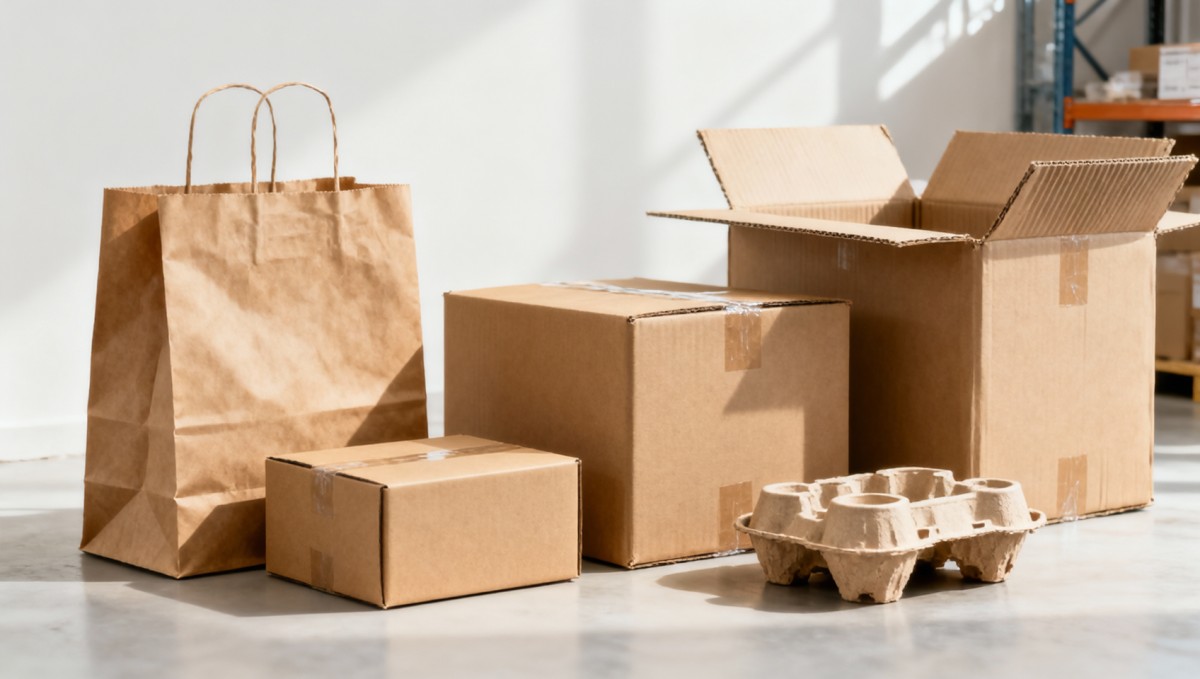
The term covers a broad range of disposable and recyclable packaging formats. Some are lightweight and retail-facing. Others are designed for transport, food contact, stacking strength, or moisture resistance.
Common materials include kraft paper, paperboard, corrugated board, coated paper, molded pulp, and laminated structures. Each serves a different purpose depending on barrier needs, weight limits, and presentation goals.
For many businesses, the appeal of paper packaging is flexibility. The same material family can be converted into cups, bowls, trays, sleeves, takeaway boxes, shopping bags, wraps, and shipping cartons.
Main packaging formats
- Paper bags for retail, grocery, and takeaway use.
- Paper boxes and folding cartons for product presentation.
- Corrugated cartons for shipping and transit protection.
- Cups, bowls, trays, and containers for foodservice.
- Wrapping paper, sleeves, and liners for handling and branding.
- Molded pulp inserts for cushioning fragile items.
Why paper packaging is getting more attention
The strongest shift comes from regulation and market expectation. Many supply chains are under pressure to reduce unnecessary plastic, improve recyclability, and show clearer environmental responsibility.
At the same time, paper packaging offers a familiar look that consumers often associate with cleanliness, simplicity, and lower environmental impact. That perception can influence shelf appeal and ordering confidence.
There is also an operational reason. Reliable paper packaging can be cost-effective at scale, easy to print, efficient to store flat, and adaptable to different product lines without changing the entire packing process.
This is where manufacturing capability becomes important. Consistent converting quality, controlled raw material sourcing, and export support can matter as much as the packaging design itself.
Types of paper packaging and where they fit best
Not every format solves the same problem. Choosing the right paper packaging starts with the use case, especially product weight, exposure to grease or moisture, handling conditions, and branding requirements.
Quick comparison by function
In real sourcing work, the best choice usually comes from matching structure to risk. A visually attractive box may still fail if it collapses in transit or cannot handle food contact conditions.
Common industry applications
Paper packaging appears across nearly every commercial channel, but usage patterns differ by industry. Looking at those patterns helps clarify what specifications deserve the most attention.
Foodservice and takeaway
This is one of the fastest-moving segments. Paper cups, soup bowls, lunch boxes, wraps, and carry bags are used for dine-in, takeaway, delivery, and grab-and-go formats.
Performance matters here. Heat resistance, leak control, grease barrier, safe printing, and stacking stability can all affect customer experience and operational speed.
Retail packaging
In stores, paper packaging often supports both protection and presentation. Shopping bags, product cartons, sleeves, and gift boxes help shape how a product is perceived before it is even opened.
Print quality becomes more important in this setting. Strong color consistency and clean converting help maintain brand image across multiple sales locations.
E-commerce and shipping
Transit packaging needs to resist compression, handling damage, and variable storage conditions. Corrugated paper packaging is widely used because it protects products without excessive packing weight.
Mailers, inner dividers, and pulp inserts are also common. These formats reduce breakage while keeping packing lines efficient and outbound volumes manageable.
Industrial and commercial supply chains
Paper packaging is also used for parts wrapping, void fill, protective layers, and export cartons. In these cases, surface finish is less important than durability, consistency, and pallet performance.
Benefits that go beyond basic cost
Cost efficiency remains important, but it is only one part of the value equation. Well-designed paper packaging can improve packing speed, reduce storage space, and support a cleaner material story.
The most practical advantages
- Broad format flexibility for food, retail, and transport use.
- Strong printability for branding, instructions, and labeling.
- Better acceptance in markets seeking recyclable solutions.
- Flat-packed supply options that save warehouse space.
- Competitive unit economics for high-volume programs.
Still, benefits depend on execution. Poor fiber quality, uneven coating, weak sealing, or inconsistent die-cutting can quickly reduce the practical advantages of paper packaging.
What to evaluate before choosing a solution
A useful evaluation starts with the product itself. Weight, temperature, grease content, shelf life, handling frequency, and transport distance all influence the right structure.
After that, it helps to compare suppliers on manufacturing consistency, lead time, printing capability, customization support, and export experience. These points often decide whether scaling will be smooth or difficult.
Key questions worth checking
- Does the paper packaging match the actual product environment?
- Are barrier properties suitable for moisture, oil, or heat?
- Can the supplier maintain consistent quality across repeat orders?
- Is OEM or private label support available when branding matters?
- Can the supplier handle export documentation and delivery coordination?
For businesses sourcing in Southeast Asia, manufacturing location can be a strategic factor. Malaysia remains attractive for balancing production reliability, regional logistics access, and cost competitiveness.
Why supplier capability changes the result
Even standard-looking paper packaging can vary widely in performance. The difference often comes from factory control, material selection, finishing consistency, and how well production aligns with the intended application.
XG Paper Manufacturing Sdn. Bhd. operates in Malaysia and focuses on disposable paper packaging products for international markets. That kind of setup matters when buyers need reliable manufacturing, steady quality, and export-ready support.
OEM and private label capability also matter more than they first appear. They allow packaging to fit local branding, channel requirements, and market positioning without changing the material category.
A practical next step
The most useful way to approach paper packaging is to define the application clearly before comparing formats. Product conditions, logistics, print goals, and order scale should all be on the same checklist.
From there, sample testing and supplier comparison become much more meaningful. The right solution is usually the one that performs consistently, fits the market, and can be supplied without avoidable friction.
When evaluating options in Malaysia or the wider Southeast Asian market, it helps to look beyond unit price and review the full supply picture. That includes quality control, customization, and professional export support alongside the paper packaging itself.