
Blog
We’re here to connect, collaborate, and support your packaging journey. Let’s talk and build smarter, sustainable solutions together.
Paper Packaging Solutions for E-commerce, Retail, and Food Delivery: What Fits Best?
Why the Best Paper Packaging Solutions Depend on Where They Are Used
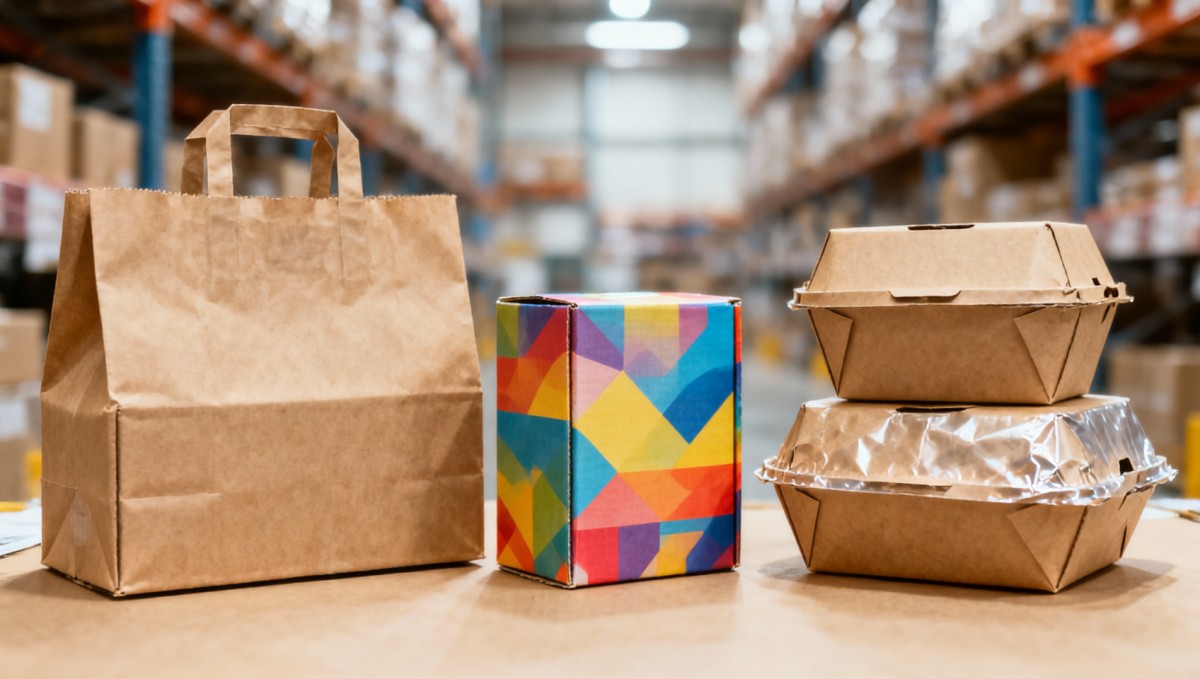
Choosing paper packaging solutions is rarely about material alone. The right format affects protection, presentation, packing speed, storage efficiency, and repeat ordering.
That becomes more obvious when e-commerce, retail, and food delivery are compared side by side. They all use paper packaging solutions, but they do not stress packaging in the same way.
A mailer that works for online apparel may fail in a takeaway kitchen. A strong food box may protect contents well, yet feel oversized or expensive on a retail shelf.
In practice, the better approach is to match packaging to movement, handling, moisture, branding needs, and replenishment rhythm. That is where many packaging decisions become clearer.
For businesses sourcing across borders, supply consistency matters as much as structure. Reliable paper packaging solutions should arrive with stable quality, export readiness, and room for brand customization.
Malaysia has become a practical sourcing base for that reason. Manufacturers such as XG Paper Manufacturing Sdn. Bhd. support global orders with dependable production, competitive pricing, and OEM flexibility.
Different Environments Create Different Packaging Priorities
The same paper packaging solutions can perform very differently depending on how the product moves from packing line to end user.
E-commerce usually adds longer transit, more touchpoints, and higher risk of crushing or tearing. Retail places more weight on display, shelf fit, and visual consistency.
Food delivery introduces heat, oil, steam, and short but intense handling pressure. Here, leakage resistance and shape retention often matter more than premium print finish.
This is why paper packaging solutions should be selected by use condition, not by general popularity. A widely used format is not automatically the right fit.
A quick comparison of what changes by scenario
In E-commerce, Paper Packaging Solutions Need to Protect Without Adding Waste
Online shipping tends to reward simple, durable paper packaging solutions. Corrugated mailers, paper envelopes, inserts, and kraft boxes are common because they control movement and keep operations fast.
The first judgment point is product fragility. Soft goods, flat goods, and boxed accessories can use lighter formats. Mixed orders or items with sharp edges need stronger board grades.
Another factor is dimensional efficiency. If the pack is much larger than the item, shipping cost rises and internal protection becomes harder. Extra void space also weakens the unboxing impression.
Branding still matters, but it should not slow the packing line. Clean printing, private label design, and consistent sizing usually deliver more value than overly complex structures.
For export-oriented sellers, consistent batch quality is especially important. If fold lines, adhesive performance, or board stiffness vary, fulfillment accuracy drops quickly during large order cycles.
What usually works best for online fulfillment
- Lightweight mailers for apparel, documents, and low-breakage items.
- Corrugated cartons for mixed orders or products needing corner protection.
- Paper inserts to reduce movement without switching to bulkier outer boxes.
- OEM printed packs when branding must stay consistent across marketplaces.
Retail Packaging Has to Sell, Store, and Survive Handling
Retail puts paper packaging solutions under a different kind of pressure. The pack is not only a protective layer. It becomes part of how the product is noticed, compared, and trusted.
That changes the selection logic. Surface finish, print clarity, folding precision, and shelf-facing consistency become more important than they are in most shipping-led environments.
Still, appearance should not be separated from practical use. Retail staff open cases, restock shelves, and handle packs repeatedly. Weak edges or unstable bottoms create waste and poor presentation.
Where product lines include multiple sizes or flavors, paper packaging solutions should also support visual hierarchy. Customers need to identify variants quickly without losing brand coherence.
This is where a manufacturer with private label capability can help. Stable printing, repeatable color control, and export support make it easier to standardize packaging across regions.
Retail decisions often come down to these checks
- Does the pack hold shape after repeated shelf handling?
- Can barcode, product name, and compliance details remain readable?
- Is the board grade strong enough for stacking and transport to stores?
- Will the chosen print finish still look consistent in repeat production?
Food Delivery Demands Paper Packaging Solutions That Handle Heat and Moisture
Food delivery is where packaging failures become visible fastest. A box may look fine at dispatch, then soften, trap steam, or leak before the meal arrives.
Because of that, the right paper packaging solutions for food are judged by what happens during the delivery window, not just by appearance at packing time.
Dry snacks, bakery items, rice meals, fried foods, and sauces all place different demands on paper structure. Steam control matters for crispy items. Oil resistance matters for fried menus. Tight closure matters for sauce-heavy dishes.
Another practical issue is handoff speed. Foodservice operations often need packs that open quickly, close securely, and stack without slipping during peak periods.
Well-made disposable paper packaging from a specialized factory can support that balance. The aim is not only sustainability messaging, but dependable performance under real kitchen conditions.
Where Businesses Commonly Misjudge Packaging Fit
One frequent mistake is treating similar channels as identical. Retail takeaway, third-party delivery, and direct online shipping may all use boxes, yet their stress conditions are different.
Another is focusing only on unit price. Lower-cost paper packaging solutions may create higher overall cost if damage, repacking, product returns, or storage inefficiency increase.
There is also a tendency to approve packaging from sample appearance alone. Real performance depends on fill weight, humidity, transit duration, sealing method, and handling speed.
In cross-border supply, overlooked export details can create delays. Carton labeling, packing consistency, and production reliability are not secondary issues when replenishment schedules are tight.
A Practical Way to Match Paper Packaging Solutions to the Right Use Case
A useful starting point is to evaluate packaging by movement path. Consider how long the item stays packed, how often it is handled, and what environmental pressure it faces.
Then narrow the choice with a short checklist:
- Product weight, shape, and edge profile.
- Exposure to moisture, grease, heat, or compression.
- Storage limits and packing-line speed.
- Branding needs, print repeatability, and private label goals.
- Export documentation, lead time stability, and batch consistency.
At this stage, manufacturer capability matters. XG Paper Manufacturing Sdn. Bhd. combines Malaysia-based production, consistent quality, competitive pricing, and professional export support for scalable orders.
That kind of support is useful when packaging needs to work across several channels at once. A product may begin in retail, move into e-commerce bundles, and later require foodservice-style disposables for promotions.
The best paper packaging solutions are usually the ones that keep performance stable while adapting to those shifts without forcing a complete packaging reset.
Moving from General Preference to a Better Packaging Decision
Paper packaging solutions work best when the decision starts with real operating conditions. E-commerce needs controlled transit protection. Retail needs presentation with handling durability. Food delivery needs barrier performance under time pressure.
That difference is exactly why packaging should be reviewed by scenario, not by assumption. The more closely the structure matches the use case, the easier it becomes to control cost, consistency, and brand experience.
A sensible next step is to map each active application, compare handling risks, and define the non-negotiable requirements before confirming specifications.
Where export-ready, customizable paper packaging solutions are needed from Southeast Asia, a discussion with a dependable Malaysian manufacturer can help turn that evaluation into a workable supply plan.